Heat and how it is measured
How Long Should a Wolf Oven Take to Preheat?
The short answer
Wolf publishes no figure, so there is nothing to hold your oven against. The question worth asking is whether it has got slower, not whether it feels slow. A chime marks the setpoint, so time it once while the oven is behaving and keep that number for Los Angeles Wolf Repair Pros, (310) 706-2347.
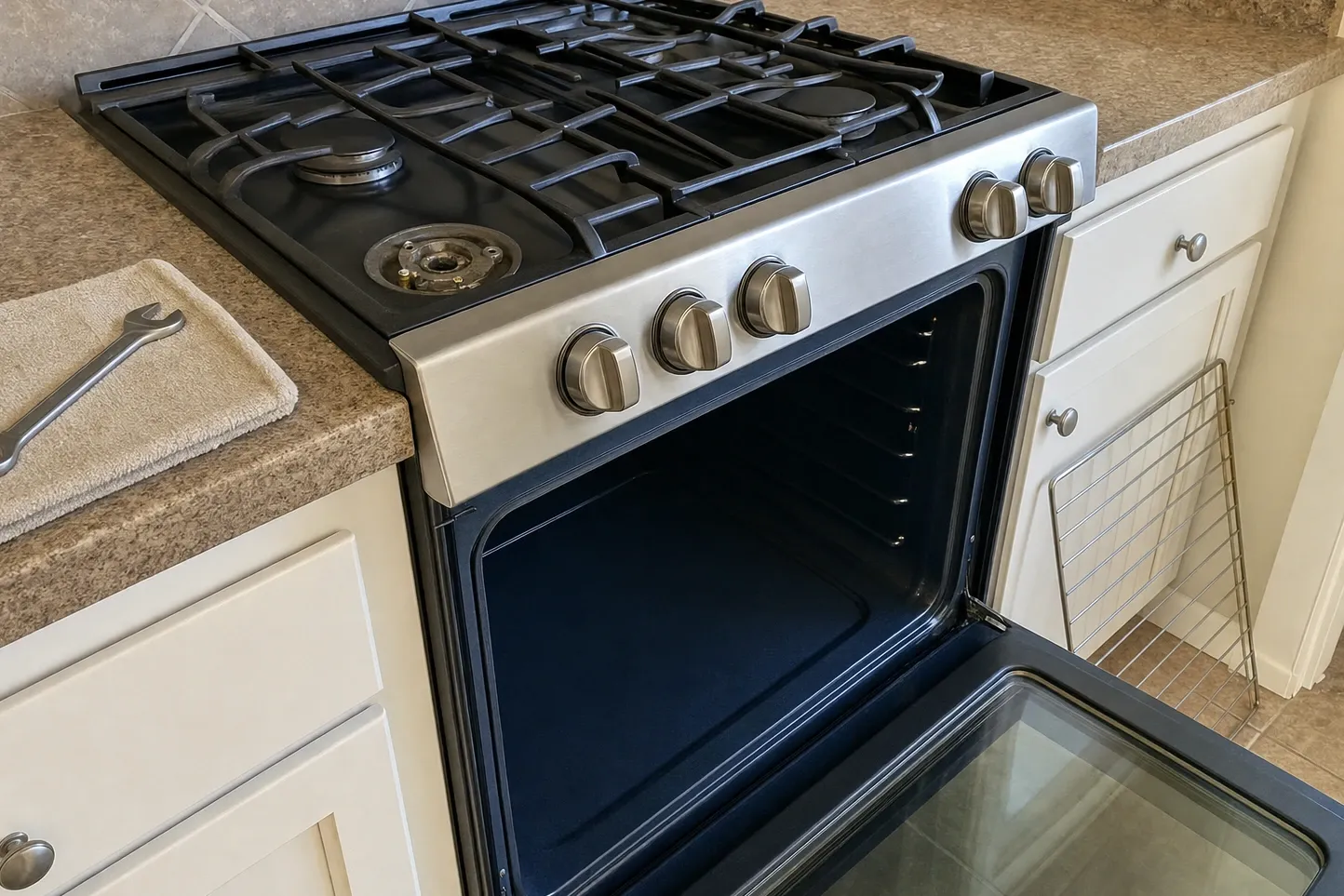
For the contractor
Wolf describes preheat as driving the cavity up as quickly and evenly as possible, and says plainly that it is not ideal for cooking. It runs on every mode except Broil, Warm and some Gourmet programmes. The chime reports the air, not the steel.
Three things make one genuinely long. A door sealing on three edges gives the heat somewhere to go. A sensor reading high brings the chime forward, so the oven is early rather than slow. A supply below 240 volts will, in Wolf’s words, compromise performance, which is an electrician’s question rather than an owner’s.
Two questions that usually follow
Is a slow preheat a sign the element is going?
Not on its own. A failed element does not heat slowly; it stops heating and the climb is left to whatever else is live. A gradual loss of speed over a season points at the door, the sensor or the supply rather than at an element.
The oven bangs while it heats. Is that part of it?
No, and Wolf lists it as normal. Popping or banging during preheat, and again while the oven cools, is the cavity expanding and contracting. If it turns constant rather than occasional, that is worth describing to Los Angeles Wolf Repair Pros on (310) 706-2347.
Signed off by
Gustavo Peralta
- Role
- Cooking-appliance technician — doors, hinges and seals
- In the trade
- 19 years
- Reached on
- (310) 706-2347
- On this page
- Heat and how it is measured