Range ovens · Woodland Hills
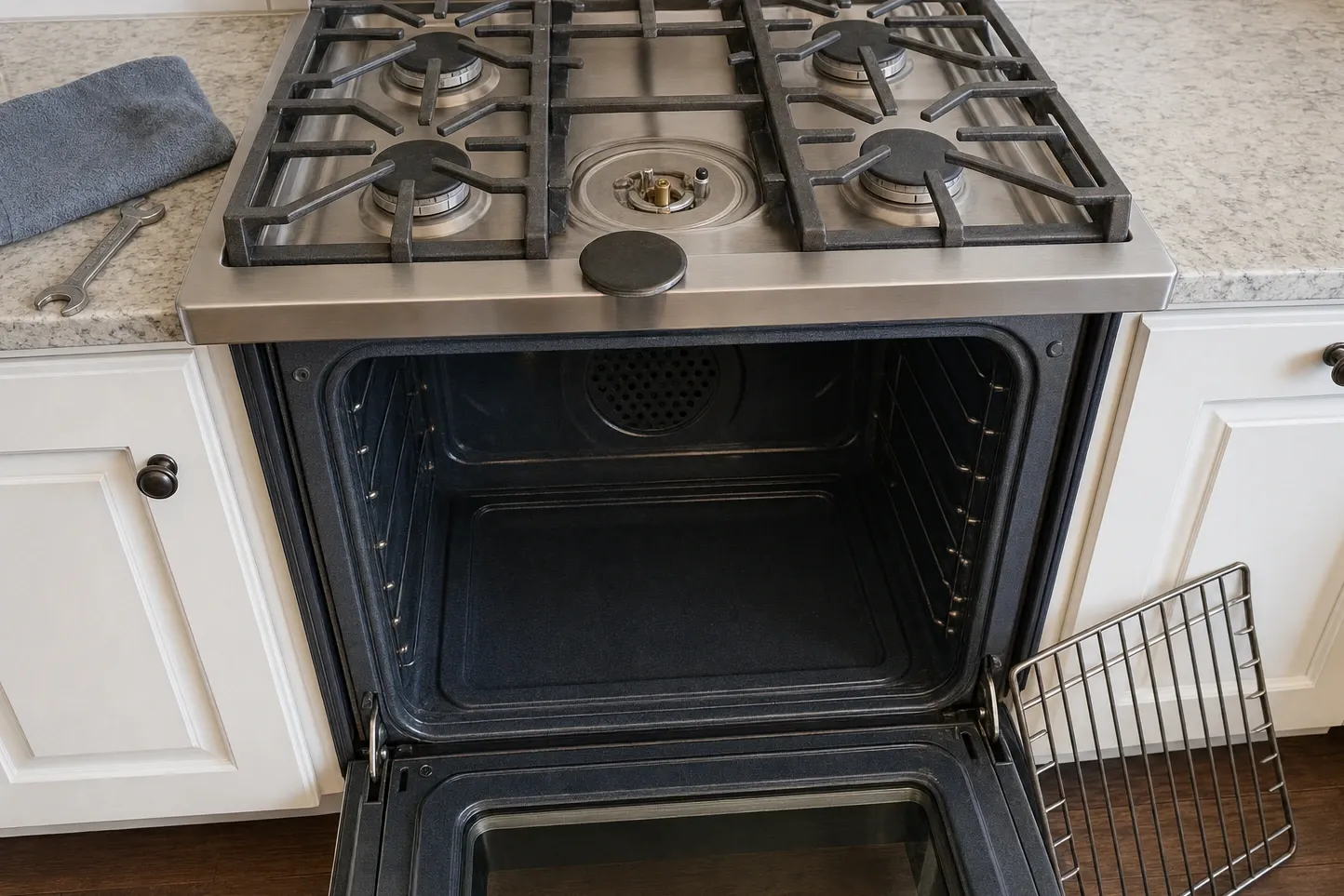
The Electric Oven Inside a Wolf Dual Fuel Range
In one line
Under the burners of a dual fuel range sits a 240-volt electric oven that shares nothing with them but a rating plate, so the half that has stopped is the half that decides the visit. Los Angeles Wolf Repair Pros settles which half it is before anything else — (310) 706-2347.
Two supplies behind one front
Both services land in the same shaded strip at the back: a three-quarter-inch gas line into a half-inch inlet with a shut-off valve somebody can still reach, and a circuit serving this appliance and nothing else. The electrical figures follow the number of cavities rather than the width — one oven wants thirty amps, two want fifty, both at 240 or 208 volts. A feed sagging under 240 volts is named in the guide as a reason performance falls away, well before anyone reaches for an element.
What the opening asks for
The opening is the width on the badge, and the appliance sets between thirty-five and a half and thirty-eight inches on its legs and casters. A combustible wall behind means a riser: ten inches at least on every forty-eight and sixty, and on a thirty-six carrying a charbroiler or griddle. The hood belongs thirty to thirty-six inches above the cooking surface; without one, the counter needs three feet of clear air to anything combustible.
The model list, and what it will not tell you
The current run is named plainly: DF30450, DF36650, DF36450G, DF36450C, DF48850, DF48650G, DF48650C, DF48450F, DF48450DG, DF48450CG, DF60650F, DF60650DG and DF60650CG, all from 2021, with a discontinued list running back to 2002. What that page does not do is decode the digits — no width, nothing about how many cavities a number carries. Read the plate: on these ranges it sits at the bottom right of the control panel, above the door.
Reading the electric half
In Woodland Hills this cavity spends August under a working cooktop in a room already warm, and a four-hour clean cycle on such an afternoon is the hardest thing it is ever asked to do. Noise as the cavity moves, and a door that holds shut until the inside falls under 550°F, follow it; neither is a fault. Heat that is steadily wrong is not a setting anybody can nudge: the offset in the menu is marked for service, and the item labelled Calibration adjusts the touchscreen. Where a knob display goes blank, twenty seconds with the breaker off is the owner’s part.
Where this one turns up
Of the eight places on the round, Woodland Hills is where this series shows up most often.
Schematic of the sector, drawn for this page — the arrangement is true, the spacing is not to scale. Los Angeles Wolf Repair Pros works this sector and no other; anything outside it belongs to somebody else.
Three questions this raises on site
Which half of a dual fuel range has actually failed?
Treat them as two appliances. Burners lighting while the cavity stays cold points at the electric side; a cavity heating while a burner will not light points at the gas side. Los Angeles Wolf Repair Pros wants both symptoms on the phone, (310) 706-2347, because the halves are diagnosed with different instruments.
What circuit does a dual fuel range need?
A circuit of its own, in every case. The published figures follow the number of cavities rather than the width: one oven on thirty amps, two ovens on fifty, at 240 or 208 volts. The guide warns that performance suffers where the supply sits below 240 volts.
Is banging during preheat something to worry about?
Not on its own. The manufacturer lists pops and bangs during preheat and cool-down as a new cavity expanding and contracting, and suggests a clean cycle if the noise carries on. What deserves a look is a bang arriving with a burning smell, or heat that never reaches the setpoint.
Signed off by
Gustavo Peralta
- Role
- Cooking-appliance technician — doors, hinges and seals
- In the trade
- 19 years
- Reached on
- (310) 706-2347
- On this page
- Range ovens — fit, door and cavity